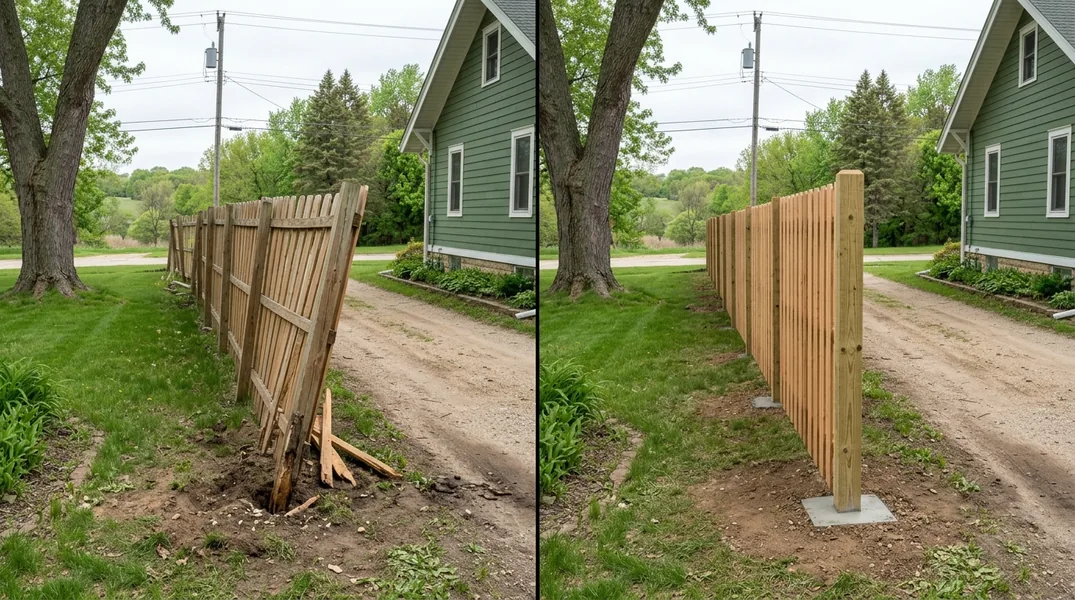
Why Madison Fences Lean: Understanding Frost Heave
If you own a home in Madison, you've likely noticed fences that tilt, sag, or appear to be slowly marching across a yard. This isn't a sign of poor craftsmanship alone. The real culprit is a natural phenomenon called frost heave, and it's especially common in Wisconsin's climate.
Frost heave occurs when moisture in the soil around fence posts freezes and expands during winter months. As temperatures drop below freezing, water in the ground turns to ice, and ice takes up more space than liquid water. This expansion pushes fence posts upward and outward, gradually destabilizing them. When spring arrives and the ice melts, the posts settle back down, but not always in their original position. Year after year, this freeze-thaw cycle repeats, and your fence drifts further from plumb.
The problem compounds if posts were installed too shallow or in poorly draining soil. Madison area homeowners often discover that what looked like a solid Wood & Privacy Fence Installation twenty years ago is now noticeably leaning. The good news is that understanding the root cause makes the fix much clearer.
Glacial Clay and Madison's Unique Soil Challenges
Madison sits on glacial terrain, which means the soil composition is largely glacial clay and other fine-textured materials left behind by ancient ice sheets. While this geology gives the area its distinctive landscape, it creates specific challenges for fence longevity. Glacial clay holds moisture exceptionally well, which means water doesn't drain away quickly around fence posts.
When water remains trapped around a post foundation, it amplifies frost heave damage. The ice lenses that form in dense clay soil can be particularly large and powerful, exerting tremendous upward force on posts. Additionally, glacial clay's tendency to retain moisture creates an environment where wood deteriorates faster. This combination of frost heave and accelerated wood decay is why Fitchburg, Sun Prairie, and surrounding communities all experience similar fence problems.
Understanding your local soil is the first step toward preventing fence problems. Proper drainage, deeper post installation, and regular maintenance can all help mitigate the effects of glacial clay on your fence's stability.
Rotted Fence Posts: The Secondary Problem That Compounds Leaning
Leaning fences aren't always just about frost heave. Rot is often the silent partner in fence failure. When a post leans and shifts repeatedly, small cracks and gaps develop in the wood. Water seeps into these openings, and over time, wood-eating fungi colonize the damaged areas. A post that started as merely tilted can become structurally weak and dangerous within a few years if rot sets in.
The combination of frost heave and rot creates a vicious cycle. A leaning post is more likely to develop cracks. Those cracks allow water penetration. Water promotes rot. Rot weakens the post further, making it unable to resist the next frost heave cycle. Before long, the post is no longer just leaning; it's crumbling at the base. This is why leaning fence repair shouldn't be delayed. Early intervention prevents rot from taking hold and keeps repair costs down.
If you notice a fence post that's soft to the touch, discolored, or visibly decaying, that's a sign that rot has already begun. Addressing rotted fence posts quickly is essential to preserving the rest of your fence and avoiding more expensive replacements down the line.
Fence Post Repair: When DIY Isn't Enough
Some homeowners attempt to fix leaning fences by simply pushing posts back upright and adding extra bracing. While this might provide a temporary cosmetic improvement, it rarely solves the underlying problem. Without addressing the root cause (frost heave, poor drainage, or rot), the fence will continue to lean within months or a year.
Professional fence post repair involves several critical steps. First, the damaged or compromised post must be removed or reinforced. Second, the post hole must be properly prepared with improved drainage or deeper installation to resist frost heave. Third, the post must be reset at the correct depth and angle, ensuring it's truly plumb. Finally, concrete must be installed correctly to lock the post in place against future frost heave pressure.
At Madison Fence, we've repaired hundreds of leaning fences across the Madison area. We know the local soil, the frost patterns, and the best techniques to ensure your fence stays straight for years to come. If your fence is tilting or you're noticing signs of instability, don't wait for the problem to worsen. Contact us at (608) 471-7749 or request a free estimate to discuss your options.
Frost Heave Fence Posts: Prevention and Long-Term Solutions
The best approach to frost heave fence posts is prevention. If you're planning a new Wood & Privacy Fence Installation, ensure posts are installed to the proper depth, which in Wisconsin typically means at least 3 to 4 feet deep for residential fences. Deeper installation places the post below the frost line, where soil temperatures remain more stable and frost heave pressure is reduced.
Drainage is equally important. Posts should be set in holes that allow water to drain away, not pool around the base. Some contractors use gravel backfill or perforated drain pipes to improve drainage around post holes. Additionally, using pressure-treated wood or concrete posts can extend the lifespan of your fence by resisting both frost heave damage and rot.
For existing fences that are leaning but not yet rotted, professional reinforcement can sometimes save the day. Steel posts can be driven alongside wooden posts, or posts can be partially reset without full removal. The key is acting before rot develops. Regular inspection of your fence, especially in spring after the frost heave season, helps catch problems early when they're easiest and least expensive to fix.
What to Budget for Leaning Fence Repair in Madison
The cost of repairing a leaning fence depends on several factors: the number of affected posts, the extent of rot damage, whether posts need replacement or reinforcement, and the type of fencing material. A single post repair might cost several hundred dollars, while replacing multiple posts or reinforcing an entire section could run into thousands. The best way to understand your specific situation is to get a professional assessment.
Madison Fence offers transparent pricing and detailed estimates so you know exactly what to expect. We recommend getting a quote before the spring season when frost heave damage is most visible and repair demand is highest. Addressing the problem early often costs less than waiting for posts to fail completely and require emergency replacement. Call us at (608) 471-7749 or visit our website to schedule your free estimate today.
Looking for a professional fence contractor in Madison? Madison Fence responds fast for all your fence needs.
Get a Free Quote