Understanding Madison's Winter Climate and Fence Demands
Living in Madison means your fence faces some serious seasonal challenges. Wisconsin winters bring temperatures that regularly dip well below freezing, heavy snow loads, ice accumulation, and dramatic freeze-thaw cycles that can stress fencing materials. Spring thaws bring moisture, and summer humidity adds another layer of environmental stress. Any fence you install needs to survive not just one harsh winter, but decades of them.
Before deciding between wood and vinyl for your Wood & Privacy Fence Installation project, it's essential to understand how each material responds to these specific conditions. Both have genuine strengths and real weaknesses in a Madison climate. The right choice depends on your priorities, budget, and willingness to maintain your investment over time.
How Wood Fences Perform in Wisconsin Winters
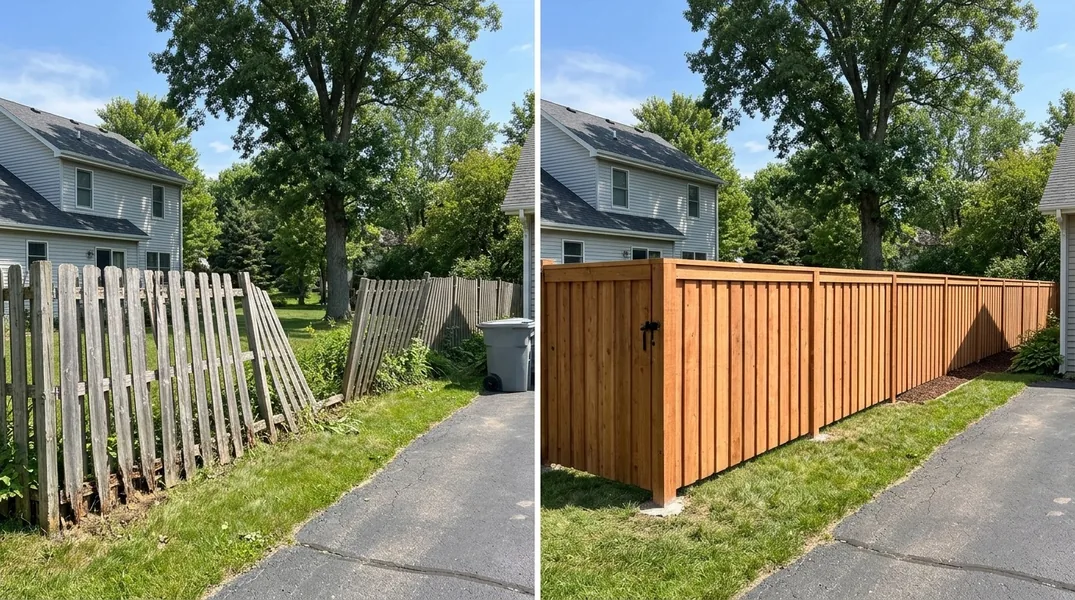
Wood has been the traditional fencing choice for generations, and there's good reason. A properly installed wood fence can last 15 to 20 years in Madison's climate, and some well-maintained installations last even longer. Wood offers natural beauty, warmth, and character that many homeowners prefer. It's also relatively easy to repair. If a board cracks or warps, you can replace just that section without affecting the entire fence.
However, wood demands respect in harsh winters. The freeze-thaw cycle is particularly brutal on wood. Water penetrates the grain, freezes, expands, and causes the wood to crack and splinter. Over time, this damage compounds. Wood also rots when exposed to constant moisture, which happens frequently during Wisconsin springs. Insects like carpenter ants and termites can compromise structural integrity. To keep a wood fence healthy through multiple winters, you need to seal or stain it every two to three years, inspect it regularly for damage, and address problems promptly. This ongoing maintenance isn't optional if you want your fence to survive.
Why Vinyl Fences Offer Winter Advantages
Vinyl & PVC Fence Installation has gained popularity over the past two decades, particularly in regions with extreme seasonal changes. Vinyl doesn't absorb water, so it's immune to rot and the freeze-thaw damage that plagues wood. It won't splinter, crack from moisture expansion, or attract insects. A vinyl fence can last 20 to 30 years with minimal intervention, making it genuinely low-maintenance in comparison to wood.
The catch is that vinyl has its own winter vulnerabilities. While vinyl doesn't crack from freeze-thaw cycles the way wood does, it becomes more brittle in extreme cold. Heavy snow loads or ice accumulation can cause vinyl panels to crack or break if they're struck with force. Vinyl also expands and contracts with temperature changes, though this is engineered into the installation. Additionally, vinyl can become discolored over time from UV exposure and dirt accumulation, though cleaning typically restores its appearance. For many homeowners in Madison, the trade-off of occasional brittleness for years without staining, sealing, or rot treatment feels worthwhile.
Wood & Privacy Fence Installation Cost in Madison: What to Budget
When comparing pricing between wood and vinyl, the initial installation cost matters, but so does the total cost of ownership over the fence's lifetime. Wood fence typically costs less upfront. A quality wood privacy fence in Madison might run $15 to $25 per linear foot installed, depending on wood grade and design. However, that initial savings erodes quickly when you factor in maintenance. Staining or sealing costs $1,500 to $3,000 every few years for an average residential fence. Over 20 years, maintenance expenses can easily exceed the original installation cost.
Vinyl fence carries a higher upfront price tag, typically $25 to $40 per linear foot installed. This premium reflects the material cost and the specialized installation techniques required. The advantage emerges over time. With minimal maintenance beyond occasional cleaning, a vinyl fence avoids the recurring expense of staining, sealing, and repairs. When you calculate the total cost of ownership across 25 to 30 years, vinyl often comes out ahead, particularly if you factor in your own labor costs and the time investment in maintaining a wood fence. For an accurate estimate tailored to your specific project, contact Madison Fence for a free estimate.
Maintenance Realities: Wood vs. Vinyl in Practice
The maintenance difference between these materials is perhaps the most significant factor for homeowners. A wood fence demands consistent attention. You need to inspect it each spring for winter damage, address any cracks or rot immediately, and plan for regular staining or sealing. If you neglect maintenance for even one season, damage accelerates. Mold and mildew can develop quickly in Wisconsin's humid summers. Boards can warp, nails can rust and pop, and the structural integrity can be compromised before you realize there's a problem. For homeowners who enjoy outdoor maintenance and want to stay actively involved with their property, this might be acceptable. For busy families or those who prefer a set-it-and-forget-it approach, wood becomes frustrating.
Vinyl requires virtually no maintenance beyond occasional washing with a garden hose or mild soap and water. You won't need to stain, seal, or treat it. You won't watch it gradually weather and gray over time. The downside is that vinyl damage typically requires panel replacement rather than spot repairs. If a section gets hit and cracks, you'll need to replace that panel. This is still less disruptive than repairing extensive wood rot, but it's worth understanding. Most vinyl fence owners find the trade-off favorable.
Making Your Decision: Which Fence Material Is Right for You
Choosing between wood and vinyl ultimately depends on three key factors: your budget, your maintenance tolerance, and your aesthetic preferences. If you have the budget for vinyl and prefer minimal maintenance, Vinyl & PVC Fence Installation makes strong sense in Madison's harsh climate. You'll spend more initially but recoup that investment through lower maintenance costs and longer lifespan. If you're budget-conscious upfront and genuinely committed to regular maintenance, wood can work, but you need to be realistic about the time and expense involved.
Consider also the aesthetic you want. Wood offers natural warmth and can be customized with stains and finishes. Vinyl comes in fewer colors and styles, though options have expanded considerably. Some homeowners in Middleton and surrounding areas prefer the classic look of wood despite the maintenance requirements. Others value the clean, modern appearance of vinyl and its practical advantages.
Whatever you choose, professional installation is crucial. Improper installation can undermine even the best materials. Madison Fence has served the Madison area with expert fence installation for years. If you're ready to move forward with your fence project, call us at (608) 471-7749 or visit our website to discuss your options with someone who understands Wisconsin winters and local fencing needs.
Looking for a professional fence contractor in Madison? Madison Fence responds fast for all your fence needs.
Get a Free Quote